1971-D Penny: Why Condition Matters More Than Year
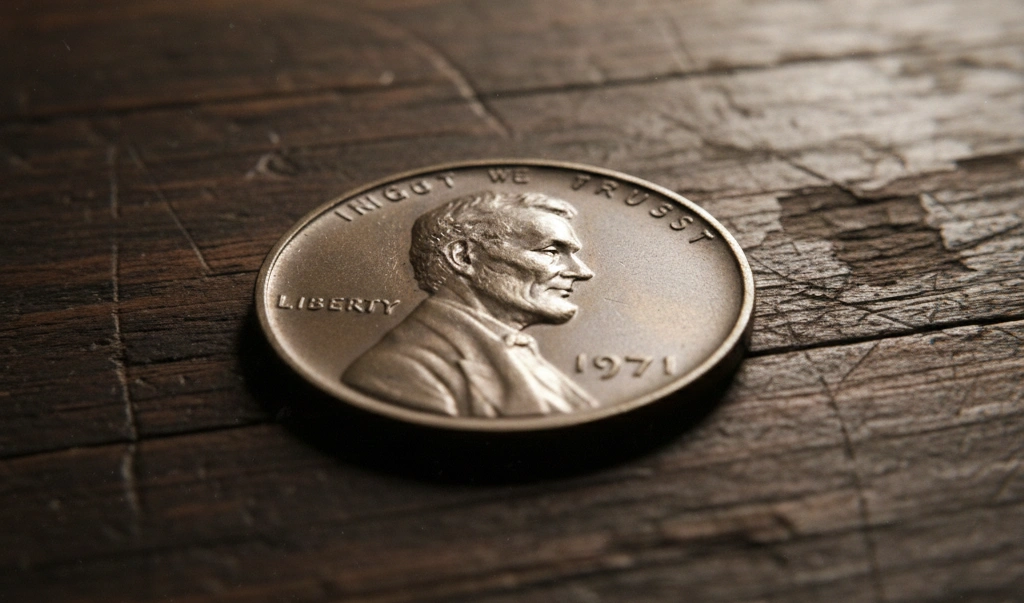
In 1971, the Denver Mint manufactured 2,911,045,600 specimens.
Such a high production volume classifies the 1971 D penny value as a mass-produced item, excluding the rarity factor based on the year of issue.
The composition of the coin consists of an alloy containing 95% copper and 5% zinc.
The item weighs 3.11 grams having a diameter of 19.05 millimeters.
The edge of the coin is plain.
Surface Color Classification
Numismatic standards established by PCGS and NGC categorize copper coins into three color groups.
Color correlates directly with the preservation of the original mint luster and the absence of oxidation.
Brown (BN). Coins possessing less than 5% of the original red color.
Such specimens have undergone significant environmental exposure.
Red-Brown (RB). Coins retaining between 5% and 95% of the original copper luster.
Red (RD). Specimens maintaining more than 95% of the original color.
Only coins categorized as Red are considered for investment purposes.
Value Analysis Based on Grade
The 70-point Sheldon scale serves as the primary evaluation tool.
For the 1971-D coin, a critical value threshold exists between the MS-66 and MS-67 levels.
Grade (MS) | Estimated Value (USD) | Value Increase Upon Grade Elevation |
MS-63 | $0.20 | — |
MS-64 | $1.00 | 400% |
MS-65 | $10.00 | 900% |
MS-66 | $25.00 | 150% |
MS-67 | $550.00 | 2100% |
MS-67+ | $3,500.00 | 536% |
The data provided confirms the lack of significant value for coins in conditions below MS-66.
Specimens found in circulation are valued at face value or by the weight of the copper contained.
Record Sales and Auction Statistics
The maximum recorded price for a 1971-D Penny was established at a Heritage Auctions event.
In 2014, a specimen in MS-67+ RD condition sold for $5,875.
In 2023, an identical MS-67+ grade determined with the coin value checker app realized a price not exceeding $4,200, indicating the volatility of the segment.
Certified Coin Statistics
Total number of verified 1971-D specimens: over 5,000 units.
Number of coins in MS-66 RD grade: ~1,800 units.
Number of coins in MS-67 RD grade: ~185 units.
Number of coins in MS-67+ RD grade: 4 units.
Number of coins in MS-68 RD grade: 0 units.
The absence of coins in MS-68 condition makes any discovered specimen potentially the most expensive in the series.
Minting Defects and Varieties
Specific technical errors exist, increasing the coin's value regardless of general wear.
1. Double Die Obverse (DDO). Doubling of obverse elements resulting from incorrect manufacturing of the working die.
The 1971-D is characterized by minor doubling of the "LIBERTY" inscriptions and the date.
2. Off-Center Strike. Displacement of the image relative to the center of the planchet.
Coins having a displacement greater than 50% while retaining the date and mint mark are valued in the $50–$200 range.
3. Die Cracks. Raised lines on the coin surface formed by the failure of the hardened steel die.
Price Change Dynamics
The market for mass-circulated coins demonstrates a non-linear dependence of price on time.
For common conditions (MS-60 — MS-65), the price remains static over decades, failing to cover inflationary costs.
In the High-End segment (MS-67 and above), the following trends are observed:
2010–2015 period: 15–20% annual price growth due to the shortage of certified high-ranking coins.
2016–2020 period: 10% price correction caused by new certified specimens from old bank rolls entering the market.
2021–2025 period: price stabilization with growth primarily seen in coins possessing exceptional visual quality (Eye Appeal).
Impact of Minting Technology on Preservation
During the 1970s, US mints utilized steel dies until their complete exhaustion.
This practice led to the appearance of microscopic metal flow lines on coin surfaces.
Such defects, classified as "Orange Peel," reduce the probability of achieving the highest grade.
Coins striking one another while falling into collection bins create mechanical damage (Bag Marks).
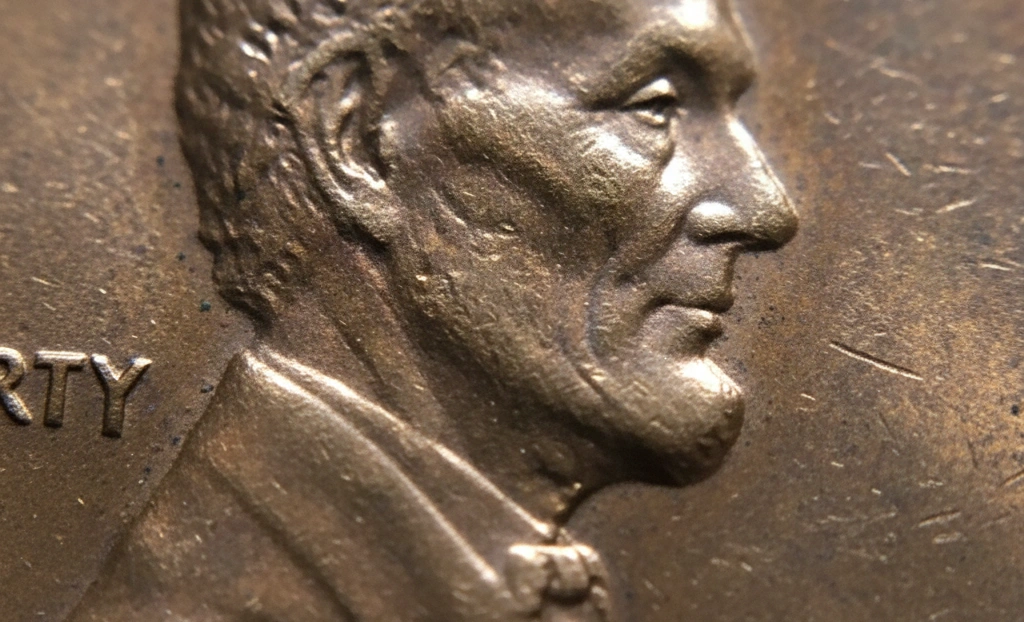
A single deep scratch located on Lincoln's cheek automatically deprives the coin of a chance for an MS-67 grade.
Comparative Analysis with 1971-S and 1971-P
Comparison with production from other mints of the same year is necessary for context.
1971-P (Philadelphia): Mintage 1,919,490,000 units. Record price — $10,350 (MS-67+ RD). High grades are encountered less frequently than Denver coins.
1971-S (San Francisco): Mintage 525,133,459 units. Proof versions intended for collector sets exist. The record for regular strikes — $12,000 (MS-67 RD).
The 1971-D Denver cent remains the most accessible among the three mints in high states of preservation.
Role of Professional Certification
Selling a 1971-D coin for an amount exceeding $100 is impossible without a verdict from an expert laboratory.
The cost of grading services ranges from $20 to $70 per coin, excluding logistics expenses, but the coin identifier app is free.
Several factors are considered when evaluating market feasibility:
The probability of obtaining an MS-67 grade (less than 4% for randomly selected coins in luster).
Shipping and insurance costs.
Current liquidity on auction platforms.
Submitting coins showing visible defects to the naked eye for grading is economically impractical.
Storage and Prevention of Degradation
Copper is an active metal reacting with sulfur and moisture.
The oxidation process transitions a coin from the Red category to Red-Brown, reducing its value by 80–90% within a few years.
To maintain investment characteristics, the following are used:
Hydrogen-free plastic capsules (Slabs).
Storage in an environment with controlled humidity (less than 30%).
Avoid surface contact with skin by using nitrile gloves.